
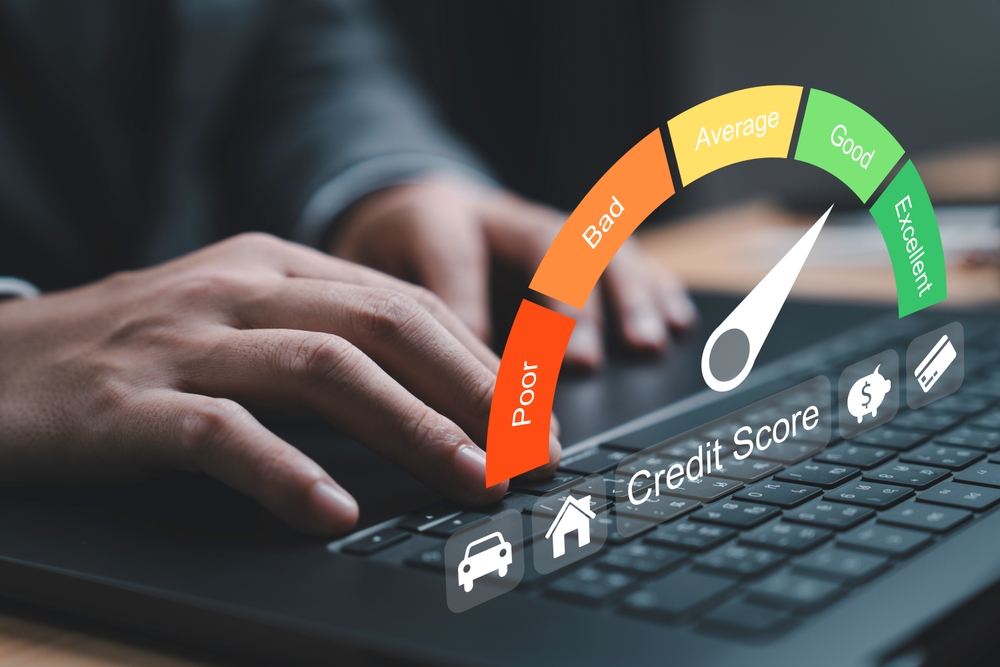
Credit scores are generated by scoring models that weigh several categories of information from a credit report. The exact formula behind any specific score isn’t fully public, and different scoring models can weigh the same information differently — which is one reason a score can vary slightly depending on where it’s checked. What follows is a general overview of the categories that commonly influence a score, not a guarantee about how any individual score will move.
Categories That Commonly Influence a Score
Payment History
Whether payments have been made on time is widely described as one of the more heavily weighted categories across major scoring models. A pattern of on-time payments tends to be viewed favorably; missed or late payments, particularly ones reported to credit bureaus, tend to be viewed unfavorably. Exactly how much a single late payment affects a specific score depends on the scoring model, how late the payment was, and the rest of the credit history — there’s no fixed, universal number of points tied to any one missed payment.
Amounts Owed
This category generally looks at how much is owed relative to available credit, sometimes called credit utilization, particularly on revolving accounts like credit cards. Carrying high balances relative to credit limits is generally viewed less favorably than carrying lower balances, though the exact effect again depends on the scoring model and the rest of the credit profile.
Length of Credit History
How long credit accounts have been open, and how long it’s been since they were used, is another commonly weighted factor. This category naturally favors older accounts and can be part of why closing a long-standing account is sometimes discussed as worth thinking through carefully rather than doing automatically.
Credit Mix
Having experience with different types of credit — for example, both revolving credit like credit cards and installment credit like a loan — is sometimes considered as a smaller factor in some scoring models. This isn’t a reason to open new types of credit just to diversify; it’s a minor factor among several.
New Credit
Recently opened accounts and recent credit inquiries are also generally considered, typically as a smaller factor relative to payment history and amounts owed. Opening several new accounts in a short period is sometimes viewed as a higher-risk pattern by scoring models, though a single, occasional inquiry generally has a limited effect.
How to Monitor Your Credit
Consumers in the United States are generally entitled to request a free copy of their credit report from each of the major nationwide credit reporting agencies on a regular basis through the official centralized service established for that purpose. Reviewing these reports periodically — checking for accounts that aren’t recognized, incorrect balances, or other errors — is one of the most direct ways to monitor credit standing without paying for a third-party service.
What to Do About an Error
If something on a credit report looks incorrect, the general process involves disputing it directly with the credit reporting agency that issued the report, and often with the business that reported the information as well. Keeping records of the dispute and any correspondence is generally recommended. For a dispute that isn’t resolved satisfactorily, a consumer protection agency or a qualified professional can advise on next steps specific to the situation.
Common Misunderstandings Worth Addressing
- “Checking my own credit report hurts my score.” Reviewing your own report or score is generally treated differently from a lender-initiated inquiry and typically does not affect the score the way a new credit application might.
- “Closing an old card automatically helps my score.” Closing an account can reduce available credit and shorten average account age, which can sometimes work against, rather than for, some of the factors described above.
- “A specific action will raise my score by an exact number of points.” No legitimate source can guarantee a specific point increase from a specific action, because scoring models, timing, and the rest of an individual’s credit profile all affect the outcome.
Credit Monitoring Services and Alerts
Beyond the free annual report, many banks and card issuers now provide free access to a credit score and periodic monitoring as part of an existing account, and some offer alerts for new inquiries or accounts opened in a person’s name. These can be a convenient way to keep a general eye on credit activity between full report reviews. Paid credit monitoring or “credit repair” services also exist; evaluating whether one is worth its cost depends on what it actually offers beyond what’s already available for free, and any service promising a guaranteed score increase or guaranteed removal of accurate negative information is a claim worth treating with skepticism.
Credit Freezes and Fraud Alerts
For anyone concerned about identity theft specifically, a credit freeze restricts access to a credit report so new accounts generally cannot be opened without it being lifted first, and a fraud alert requires extra verification steps before new credit is extended. Both are generally available directly through the credit reporting agencies at no cost, separate from any paid monitoring product.
Building a Simple Monitoring Habit
A practical approach many people use is a recurring calendar reminder — for example, checking one credit report every four months on a rotation among the reporting agencies, so that each one is reviewed roughly once a year without requesting all three at the same time. Pairing that habit with a quick scan of any account statements for unfamiliar charges rounds out a reasonably thorough general monitoring routine.
What a Credit Score Doesn’t Measure
A credit score reflects credit-related history — it doesn’t measure income, savings, employment status, or overall financial health. Two people with very different financial situations can have similar credit scores, and a strong score doesn’t automatically mean someone is financially secure in a broader sense, just as a lower score doesn’t necessarily mean the opposite. Keeping this distinction in mind can help put any single number in perspective.
When to Involve a Professional
For credit report errors that are hard to resolve, for questions about how a major financial decision might affect credit standing, or for broader debt or credit concerns, a qualified credit counselor, financial counselor, or attorney is better positioned to give guidance specific to an individual situation than any general article.
Credit scores are shaped by several weighted categories — payment history, amounts owed, length of history, credit mix, and new credit — and different scoring models can weigh them differently. Regularly reviewing a credit report for accuracy is a practical way to monitor credit standing; no specific action can guarantee a specific point change.
Sources and general references (reviewed August 2026): Consumer Financial Protection Bureau (consumerfinance.gov), Federal Trade Commission (ftc.gov), and AnnualCreditReport.com, the centralized service for free credit reports. This article is general education and does not constitute credit or legal advice.